

Before the world wakes up, Muslims are already standing in prayer. That’s the fajr definition in action. Fajr means “dawn” in Arabic the first prayer of the Islamic day. It’s quiet. It’s powerful. It’s unlike anything else.
The fajr definition runs deeper than a simple alarm clock moment. The word itself means “to break forth” like light tearing through the darkness of night. Think about that imagery. Every single morning, that first crack of light is Allah’s invitation to worship. It’s a choice between warmth of your bed and something far greater. Fajr isn’t just a prayer. It’s a daily reset a renewal of faith, purpose, and devotion that sets the tone for everything ahead.
Fajr Prayer: Time, Importance, And Benefits In Islam
Fajr prayer is the first of five daily prayers in Islam. It starts at true dawn and ends at sunrise. Muslims consider it one of the most blessed moments of the entire day.
Missing Fajr isn’t just losing a prayer. It means missing Allah’s protection for that day. Scholars consistently emphasize its enormous spiritual weight across centuries of Islamic teaching.
No other prayer carries the same morning energy. It sets your entire day’s tone. Wake up for Fajr and everything that follows feels more purposeful, more grounded, more blessed.
The Importance Of Fajr Salah
Fajr holds a unique rank among all five prayers. The Quran describes it as “witnessed” meaning angels gather specifically to observe this prayer. That alone tells you everything about its significance.
The Prophet Muhammad (PBUH) never took Fajr lightly. He connected it directly to Allah’s protection throughout the day. Performing it consistently separates the truly devoted from the merely occasional worshipper.
It’s also a test of sincerity. Nobody’s watching when your alarm goes off at dawn. Getting up anyway that’s real faith in motion.
Psychological Benefits Of Fajr Prayer
Starting your day with prayer genuinely reduces stress. Connecting with Allah before the chaos begins lowers cortisol levels naturally. Your mind enters the day calmer, clearer, and more focused than most people ever experience.
Fajr also builds extraordinary self-discipline. Overcoming sleep’s pull every single morning creates mental resilience. That same strength carries into work, relationships, and every challenge life throws your way.
There’s also a deep sense of accomplishment. You’ve already done something meaningful before sunrise. That quiet victory fuels a positive, productive mindset for hours afterward.
Spiritual Preparation For Fajr
Preparation for Fajr actually begins the night before. Make a sincere intention before sleeping. Ask Allah directly to wake you for prayer that niyyah acts like a spiritual alarm in your soul.
How you spend your evening matters enormously. Avoiding sins, reducing screen time, and sleeping early all make waking for Fajr significantly easier. A pure heart responds more readily to Allah’s call.
Reflect on Fajr’s rewards before closing your eyes. Think about the angels witnessing your prayer. That anticipation alone can make rising before dawn feel less like a burden and more like a privilege.
How To Perform Fajr Salah
Performing Fajr correctly requires both physical and spiritual readiness. You need proper purification, the right intention, and focused presence. Rush through it and you miss the entire point of standing before Allah.
The prayer consists of two Sunnah rakats followed by two Fard rakats. Each unit involves standing, bowing, and prostrating. Every movement carries meaning none of it is merely mechanical or routine.
Learn each step with care and genuine understanding. Fajr isn’t a checkbox to tick. It’s a conversation with your Creator performed with full body, mind, and heart.
Wake Up Before Dawn
Waking before dawn demands real commitment. Set multiple alarms if needed. Go to bed early enough that rising feels manageable rather than torturous small practical habits make a massive spiritual difference.
Ask Allah sincerely to help you wake up. Many Muslims report that sincere dua before sleep works better than any alarm. There’s something remarkable about waking up exactly at Fajr time without explanation.
Don’t linger in bed once you’re awake. Shaytan actively discourages Fajr he whispers reasons to stay under the covers. Move immediately and the battle is already half won.
Perform Wudu (Ablution)
Wudu is ritual purification before prayer. Wash your hands, mouth, nose, face, arms, head, and feet in a specific sequence. Without valid wudu, your prayer simply isn’t accepted.
The cold water during wudu actually helps wake you fully. Many Muslims find it clears away the fog of sleep instantly. It’s both a spiritual requirement and a genuinely practical morning tool.
Wudu also carries its own reward. Every drop of water that falls takes sins with it. You enter Fajr already cleansed spiritually and physically before uttering a single word of prayer.
Face The Qibla (Mecca)
Every Muslim on earth faces the same direction during prayer. That direction is the Kaaba in Mecca the Qibla. This single act unites over a billion people in one synchronized moment of worship.
Use a compass, prayer app, or ask locally to find your Qibla direction. Getting this right matters. Praying in the wrong direction without genuine effort to find the correct one affects your prayer’s validity.
There’s something breathtaking about this concept. Imagine millions of people simultaneously turning toward one point at dawn. Fajr connects you to every Muslim across every timezone in real time.
Make The Niyyah (Intention)
Niyyah means intention and in Islam, intention is everything. Before starting Fajr, firmly resolve in your heart that you’re praying two obligatory rakats for Allah’s sake. No spoken words are required.
Don’t overthink the niyyah process. It’s not a complex formula. Simply being aware of what you’re doing and why you’re doing it counts as a valid intention in Islamic jurisprudence.
A sincere niyyah transforms a physical routine into genuine worship. The same movements performed without intention become mere exercise. With intention, they become one of the most valuable acts a human can perform.
Start The Prayer With Takbeer To Fajr Salah
Raise both hands to shoulder or ear level and say “Allahu Akbar.” This is Takbeerat al-Ihram the opening declaration that Allah is the Greatest. With these words, you formally enter the sacred state of prayer.
Everything worldly gets left behind at this moment. Your phone, your worries, your to-do list none of it exists inside the prayer. You’ve stepped into a direct audience with Allah Himself.
Say it with full conviction. Don’t rush these opening words. They mark the boundary between ordinary time and sacred time treat that transition with the reverence it genuinely deserves.
Recite Surah Al-Fatiha
Surah Al-Fatiha is mandatory in every single rakat of every prayer. It’s the opening chapter of the Quran seven powerful verses that cover praise, gratitude, and guidance. No prayer is valid without it.
The Prophet (PBUH) called Al-Fatiha the greatest surah in the entire Quran. It’s a complete conversation with Allah. You praise Him, acknowledge His sovereignty, then ask for guidance to the straight path.
Memorize it perfectly and recite it meaningfully. Don’t let familiarity breed carelessness. Each word carries extraordinary depth reciting it attentively every morning is a gift most people overlook entirely.
Recite Any Other Verse In The Quran
After Al-Fatiha, recite additional Quranic verses in the first two rakats. The Prophet (PBUH) deliberately recited longer passages during Fajr. The peaceful morning atmosphere makes it ideal for extended Quranic recitation.
Surahs like Al-Waqi’ah, At-Tur, and Qaf were among the Prophet’s favorites for Fajr. You don’t have to recite these specifically. Any passage you know well and recite with understanding works beautifully.
Use Fajr as motivation to memorize more Quran. Having a rich repertoire of surahs makes each prayer feel fresh and deeply personal. It transforms recitation from habit into genuine spiritual nourishment.
Perform Ruku (Bowing) To Fajr Salah
Say “Allahu Akbar” and bow forward with hands on knees. Your back should be flat parallel to the ground. This position of ruku is a physical expression of humility before Allah’s greatness.
While bowing, repeat “Subhana Rabbiyal Adheem” at least three times. It means “Glory be to my Lord, the Most Great.” Say it slowly. Let the meaning sink in rather than rushing toward the next position.
Ruku teaches submission through the body itself. You’re literally bending before your Creator. That physical posture mirrors the internal state every Muslim strives to maintain throughout their entire life.
Rise From Ruku
Standing back up from ruku carries its own specific phrase. Say “Sami’Allahu liman hamidah” meaning “Allah hears those who praise Him.” Then respond with “Rabbana wa lakal hamd” once fully upright.
This moment of standing between ruku and sujood is called i’tidal. It’s not just a transition it’s its own act of worship. Many people rush through it unnecessarily, losing significant reward in the process.
Stand completely still and upright. Let tranquility settle before moving forward. Every position in prayer deserves full presence and this brief standing moment is no exception whatsoever.
Perform Sujood (Prostration)
Sujood is the pinnacle of the entire prayer. Say “Allahu Akbar” and place your forehead, nose, both palms, both knees, and toes firmly on the ground. Seven body parts touch the earth simultaneously.
In this position, you’re physically at your lowest point. Yet spiritually, you’ve never been closer to Allah. The Prophet (PBUH) confirmed that a servant is nearest to Allah during sujood that’s extraordinary.
Recite “Subhana Rabbiyal A’la” at least three times. It means “Glory be to my Lord, the Most High.” The contrast is stunning you’re at your lowest while glorifying the Highest. That’s the beauty of sujood.
Sit Between The Two Sujoods
Between the two prostrations, sit briefly and say “Rabbighfir li” “O my Lord, forgive me.” This short seated pause carries enormous weight. You’re asking for forgiveness sandwiched between two acts of ultimate humility.
Don’t rush this sitting position. Many worshippers treat it as merely a pause between sujoods. In reality, it’s an independent act of worship with its own supplication and its own distinct reward.
Then perform the second sujood identically to the first. Consistency and care matter throughout the prayer. Every repetition deepens your focus rather than becoming mechanical if you approach it with genuine presence.
Stand For The Second Rakat
After completing the first rakat’s sujoods, rise for the second rakat. Say “Allahu Akbar” as you stand. Repeat the same sequence Al-Fatiha, additional Quran, ruku, rising, and two sujoods with equal focus.
The second rakat deserves the same energy as the first. Fatigue or distraction shouldn’t diminish its quality. Each rakat is a complete unit of worship standing independently before Allah’s sight.
Maintaining consistency across both rakats demonstrates genuine devotion. It’s easy to start strong and fade. The believer who finishes with the same intensity they began with that’s who truly honors the prayer.
Tashahhud And Salam From Fajr Salah
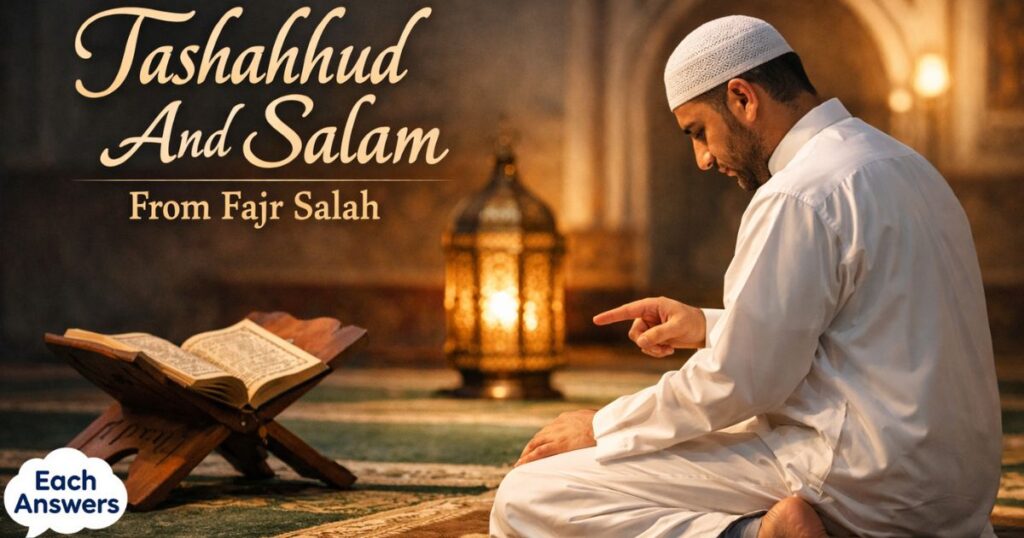
After the second rakat’s final sujood, sit and recite the Tashahhud. This testimony of faith includes prayers upon Prophet Muhammad (PBUH). It’s a beautiful, comprehensive closing statement of every prayer unit.
The Tashahhud reconnects you to the broader Muslim ummah. You’re reciting words that billions of Muslims have spoken across fourteen centuries. That continuity is something genuinely moving to contemplate during Fajr.
Conclude by turning right and saying “Assalamu Alaikum wa Rahmatullah” then repeat to the left. With that greeting of peace, Fajr is complete. You’ve just begun your day in the best possible way.
What Is The Correct Time To Pray Fajr?
Learn more:Dua e Qunoot: Powerful Islamic Supplication
Fajr time begins at true dawn called al-fajr al-sadiq in Arabic. This is when horizontal light spreads across the horizon. It’s distinctly different from the false dawn, which appears as a vertical streak then vanishes.
The window closes the moment sunrise begins. That’s your entire timeframe from true dawn to sunrise. In most locations, that’s roughly 60 to 90 minutes depending on the season and your geographical location.
Use a reliable prayer app or local mosque schedule for precise timings. These change daily throughout the year. Never guess knowing your exact Fajr window is a basic responsibility every Muslim should prioritize.
What To Read In Fajr Prayer?
| Position | What To Recite |
| Every Rakat | Surah Al-Fatiha (mandatory) |
| After Al-Fatiha | Any Surah or verses from Quran |
| Ruku | Subhana Rabbiyal Adheem (x3 minimum) |
| Rising from Ruku | Sami’Allahu liman hamidah / Rabbana wa lakal hamd |
| Sujood | Subhana Rabbiyal A’la (x3 minimum) |
| Sitting between Sujoods | Rabbighfir li |
| Final Sitting | Tashahhud + Salawat upon the Prophet |
The Prophet (PBUH) specifically recited longer surahs during Fajr. Surahs Al-Waqi’ah, At-Tur, and Qaf were among his favorites. The quiet morning atmosphere makes extended recitation feel natural and deeply rewarding.
Choose verses you understand, not just memorize. Reciting with comprehension transforms the experience entirely. Even a short surah recited with full understanding outweighs a lengthy one rushed through mindlessly.
Do I Have To Perform Fajr Every Day
Yes absolutely and without exception. Fajr is Fard ‘Ayn, meaning it’s an individual obligation upon every sane adult Muslim. Skipping it intentionally isn’t a minor slip. Scholars classify it among the gravest sins in Islam.
There’s no day off from Fajr. Illness, travel, busyness none of these cancel the obligation. They may affect how you perform it but never whether you perform it. The duty remains constant regardless of circumstances.
Think of it this way. Every single morning, Allah offers you protection and blessings. Refusing that offer deliberately is a loss no worldly comfort can compensate for. Show up every day without negotiation.
How Many Rakats Is The Fajr Prayer
| Prayer Component | Rakats | Type |
| Sunnah | 2 | Highly Emphasized (Mu’akkadah) |
| Fard | 2 | Obligatory |
| Total | 4 |
The two Sunnah rakats come first, before the Fard. The Prophet (PBUH) never skipped these not even while traveling. He called them better than the world and everything in it. That’s remarkable praise.
The two Fard rakats follow immediately after. These are the obligatory units that every Muslim must perform. Together, four rakats make up the complete Fajr prayer as the Prophet (PBUH) consistently demonstrated.
Do Men And Women Perform The Fajr
Both men and women are equally obligated to perform Fajr. The spiritual rewards, the divine protection, the blessings all of it applies identically regardless of gender. Islam makes no distinction here whatsoever.
The primary difference involves location. Men are strongly encouraged to pray Fajr in congregation at the mosque. Women, however, can pray at home and receive equal reward. Islam honors both paths of devotion genuinely.
The method of prayer is essentially the same for both. Minor differences exist in certain posture details according to some scholarly opinions. However the core structure, the words, and the spiritual significance remain completely identical for everyone.
Can You Pray Fajr After Sunrise
Missing Fajr before sunrise means you must make it up immediately this is called Qada prayer. The Prophet (PBUH) said clearly that whoever misses a prayer should perform it the moment they remember. No further delay is acceptable.
However understand this honestly. Qada prayer doesn’t carry identical reward to praying on time. The spiritual protection, the angelic witnessing, the specific blessings those are tied exclusively to the correct time window.
Don’t treat oversleeping casually. Occasional genuine mistakes happen to everyone. But developing a pattern of missing Fajr and simply making it up later reflects a concerning relationship with one of Islam’s greatest gifts.
What Does The Prophet Say About Fajr Prayer
The Prophet Muhammad (PBUH) spoke about Fajr with extraordinary enthusiasm. He promised that whoever prays both Fajr and Asr will enter Paradise. That’s a direct guarantee from the most trustworthy human who ever lived.
He also described those who walk to mosques in darkness for Fajr and Isha as receiving perfect light on Judgment Day. Imagine that your predawn journey through dark streets becoming illumination when it matters most eternally.
Perhaps most striking, he called Fajr and Isha the most burdensome prayers for hypocrites. That statement cuts both ways. Struggling with Fajr is human. But consistently showing up anyway? That’s what distinguishes true believers from everyone else.
Global Perspectives On Fajr
In Muslim-majority countries, Fajr transforms cities audibly. The adhan echoes from countless minarets simultaneously. Streets that were silent suddenly carry the sound of shuffling feet heading toward mosques in the predawn darkness.
For Muslim minorities in Western countries, Fajr is a more personal, private discipline. No communal adhan wakes the neighborhood. You’re relying entirely on internal motivation and personal relationship with Allah arguably a purer test of faith.
Geography creates fascinating challenges too. Near the Arctic Circle, summer Fajr times can overlap with Isha barely any night separates them. Muslims there navigate complex scholarly rulings to maintain their worship faithfully despite extreme conditions.
Technological Aids For Fajr Prayer
Modern technology has genuinely transformed Fajr consistency for millions of Muslims worldwide. Prayer apps like Muslim Pro and Athan Pro deliver accurate location-based timings with customizable adhan alarms. They’ve removed every practical excuse for missing the prayer.
Smart home devices offer another layer of support. Program Alexa or Google Assistant to announce Fajr time or play the adhan automatically. When your entire home environment nudges you toward worship, resistance becomes significantly harder to justify.
Specialized alarm clocks designed specifically for Fajr take things further. Some require you to physically stand and replace them on a shelf to silence the alarm. Clever engineering in service of spiritual discipline that’s a genuinely beautiful combination.
Difference Between Tahajjud And Fajr
| Feature | Tahajjud | Fajr |
| Type | Voluntary (Nafl) | Obligatory (Fard) |
| Time | After Isha until dawn | True dawn until sunrise |
| Rakats | Flexible (2, 4, 8, etc.) | 2 Sunnah + 2 Fard |
| Best Time | Last third of night | As early as possible after dawn |
| Consequence of Missing | No sin | Major sin |
Tahajjud is the night’s secret conversation with Allah. Fajr is the morning’s mandatory appointment. Both are precious but confusing them or treating them as interchangeable reflects a misunderstanding of Islamic prayer structure.
The ideal scenario is performing Tahajjud in the night’s final third then transitioning smoothly into Fajr at dawn. Many of Islam’s greatest scholars maintained this practice consistently throughout their entire lives.
What Comes After Fajr
After completing Fajr, don’t immediately jump up and start your day. The Prophet (PBUH) would remain seated, engaged in dhikr until the sun fully rose. This post-Fajr time carries its own extraordinary blessings and rewards.
Recite Ayat al-Kursi, the final three surahs of the Quran, and say “SubhanAllahi wa bihamdihi” one hundred times. These aren’t arbitrary suggestions. Each carries specific promises of protection and reward documented in authentic hadith.
Many Muslims also read Surah Yasin during this blessed window. The combination of completing Fajr then immediately immersing in Quran and dhikr creates a morning routine that no productivity guru has ever genuinely matched.
Benefits Of Surah Yasin After Fajr
Surah Yasin carries the title “heart of the Quran” for profound reasons. Its themes encompass resurrection, divine power, and human accountability weighty concepts perfectly suited for quiet morning reflection after Fajr.
A widely cited hadith suggests reciting Yasin in the morning brings ease for that entire day. Scholars debate the hadith’s strength. However reciting any Quranic surah after Fajr brings undeniable reward regardless of scholarly classification debates.
Think of reading Surah Yasin after Fajr as spiritual breakfast. Your body needs morning fuel so does your soul. Starting with Fajr prayer then nourishing yourself with Yasin creates an internal richness that sustains you genuinely throughout the day.
Can Nafl Be Prayed After Fajr
Voluntary prayers are discouraged immediately after the Fard of Fajr until the sun rises completely. This prohibition exists for clear wisdom it prevents any resemblance to sun-worship practiced by pre-Islamic pagan cultures historically.
There are two specific exceptions worth knowing. If you missed the two Sunnah rakats before the Fard, you may perform them after. Additionally making up a missed obligatory prayer is always permitted regardless of the time.
Beyond these exceptions, use the post-Fajr time for dhikr, Quran recitation, and dua instead. The prohibition on nafl doesn’t leave you spiritually idle. It simply redirects your energy toward other equally powerful acts of worship.
FAQ’S
What is the fajr definition in simple terms?
Fajr means “dawn” in Arabic. It’s the first of five daily Islamic prayers, performed before sunrise. It marks every Muslim’s sacred morning beginning.
What does the word fajr literally mean?
The word fajr literally means “to break forth.” It describes light breaking through darkness at dawn a perfect symbol for spiritual awakening.
Why is the fajr definition important for Muslims?
Understanding the fajr definition matters because it shapes the entire day. It’s not just a prayer it’s a daily renewal of faith.
When exactly does fajr time begin according to its definition?
Fajr begins at true dawn when horizontal light spreads across the horizon. It ends precisely at sunrise giving Muslims roughly ninety minutes.
How does the fajr definition differ from regular morning prayer?
Fajr isn’t simply a morning routine. Its definition carries divine weight angels witness it, Allah’s protection follows it and blessings surround it completely.
Conclusion
Fajr Prayer: Time and Importance in Islam isn’t just a topic it’s a way of life. The fajr definition goes beyond a simple meaning. It’s dawn. It’s devotion. It’s your first conscious act of the day dedicated entirely to Allah. Every morning carries this incredible opportunity.
The fajr definition shapes how Muslims live, think and worship daily. It’s simple yet powerful. Wake up. Purify yourself. Stand before Allah. That’s it. Understanding the fajr definition transforms ordinary mornings into extraordinary spiritual moments. Don’t let another dawn pass without embracing what fajr truly means.