
The IDT full form in chat is “I Don’t Think” and it’s everywhere right now. You’ve seen it in texts, Discord servers and Instagram comments. Yet most people still scroll past it completely clueless.
Here’s the thing. Knowing the IDT full form in chat instantly makes you a sharper, faster communicator online. It’s basically a digital shrug, casual, quick and brutally honest. No long sentences needed. People drop IDT full form in chat on WhatsApp, Twitter and TikTok dozens of times daily. It cuts through the noise. Once you crack this one shorthand, reading online conversations feels like unlocking a whole new language.
Definition & Meaning
The IDT full form in chat stands for “I Don’t Think.” It’s a casual abbreviation used in texting and online conversations. People use it to express doubt or mild disagreement quickly and effortlessly.
You’ll find IDT in everyday digital chats all the time. It mirrors how people actually speak in real life. Instead of typing a full sentence, one short abbreviation does the job perfectly.
IDT keeps communication simple and natural. It belongs to a growing library of internet slang that speeds up conversations. Once you understand it, texting feels way more intuitive and fun.
Background & History
IDT didn’t appear overnight. It grew out of early SMS culture in the 1990s when phones had strict 160-character limits. Typing was slow and shortcuts became absolutely necessary for faster communication.
Platforms like AOL Instant Messenger and MSN Messenger helped spread abbreviations like IDT rapidly. Millions of users adopted these shortcuts naturally. The habit stuck and carried over into modern messaging apps effortlessly.
Today IDT thrives across social media and gaming platforms. It survived because it’s simple and mirrors natural human thought. Unlike trendy slang, IDT has genuine staying power in digital communication.
Usage In Various Contexts
IDT pops up across many different digital spaces daily. From casual texts to competitive gaming chats, its usage stays consistent. Context shapes how people interpret it but the core meaning never changes.
You’ll spot IDT in comment sections, group chats and live streams. It adapts smoothly to different tones and situations. That flexibility is exactly why so many people keep using it.
Understanding where IDT appears helps you use it correctly yourself. Each platform has its own communication style and vibe. Knowing the context makes your messaging sharper and more relatable.
Texting
In texting IDT flows naturally into everyday conversations. Someone might reply “IDT I can make it tonight” without a second thought. It’s quick, honest and keeps the chat moving forward.
Friends use IDT to soften disagreements without sounding harsh or blunt. It adds a casual, laid-back tone to messages instantly. Nobody feels offended because the vibe stays light and friendly throughout.
Texting thrives on speed and IDT delivers exactly that. It replaces entire phrases with just three letters. That efficiency is why it remains a staple in modern texting culture.
Social Media
On social media IDT helps users share opinions without writing essays. A tweet saying “IDT this movie deserves the hype” gets the point across fast. Followers immediately understand the skepticism behind it.
Platforms like TikTok and Instagram reward short punchy communication. IDT fits that style perfectly and feels completely native to these spaces. It blends into comment sections without standing out awkwardly.
Content creators also use IDT to engage audiences conversationally. It makes captions feel human and relatable rather than stiff or promotional. That authenticity builds stronger connections with followers over time.
Gaming
Gamers rely on IDT constantly during fast-paced matches and live streams. Typing “IDT we can win this round” takes less than two seconds. Speed matters in gaming and IDT delivers that instantly.
Discord servers are filled with IDT in strategy discussions and casual banter. It helps players manage expectations without disrupting the flow of gameplay. Everyone on the team understands it immediately without confusion.
Twitch chat moves lightning fast and short abbreviations dominate. IDT slots in perfectly alongside other gaming slang expressions. It keeps communication sharp, efficient and totally on-brand for gaming culture.
Casual Conversations
Outside gaming and social media IDT works great in everyday online chats. Group chats about weekend plans or movie recommendations use it constantly. It keeps things relaxed and pressure-free for everyone involved.
Someone asking “think it’ll rain tomorrow” might get “IDT, sky looks clear” back. That response is fast, friendly and completely natural sounding. No overthinking required from either person in the conversation.
Casual conversations thrive when communication feels effortless and genuine. IDT removes friction from expressing doubt or hesitation in chats. It’s one of those abbreviations that just makes everyday texting smoother.
Common Misconceptions & Clarifications
Many people mistakenly think IDT means “I Didn’t Think” in chats. That’s a common mix-up but the correct meaning is always “I Don’t Think.” Context usually makes the right interpretation obvious though.
Some users assume IDT works fine in professional or formal settings. It doesn’t. Using it in work emails or academic writing looks careless and unprofessional. Always switch to full sentences in serious communication.
Another misconception is that IDT expresses strong disagreement. Actually it signals mild doubt rather than outright rejection. Think of it as a gentle pushback not a firm refusal or argument.
Similar Terms & Alternatives
Several abbreviations share similar vibes with IDT but carry different meanings. Knowing the differences helps you communicate more precisely online. Here’s a quick comparison of the most common ones:
| Term | Full Form | Best Used When |
| IDT | I Don’t Think | Expressing doubt or mild disagreement |
| IDK | I Don’t Know | Showing lack of knowledge |
| IDC | I Don’t Care | Conveying indifference |
| IMO | In My Opinion | Sharing a personal viewpoint |
| TBH | To Be Honest | Being direct or candid |
| IDTS | I Don’t Think So | Stronger disagreement than IDT |
Each term fills a specific communication need. Mixing them up can send the wrong message entirely. Choose carefully based on what you actually want to express.
How To Respond To This Term
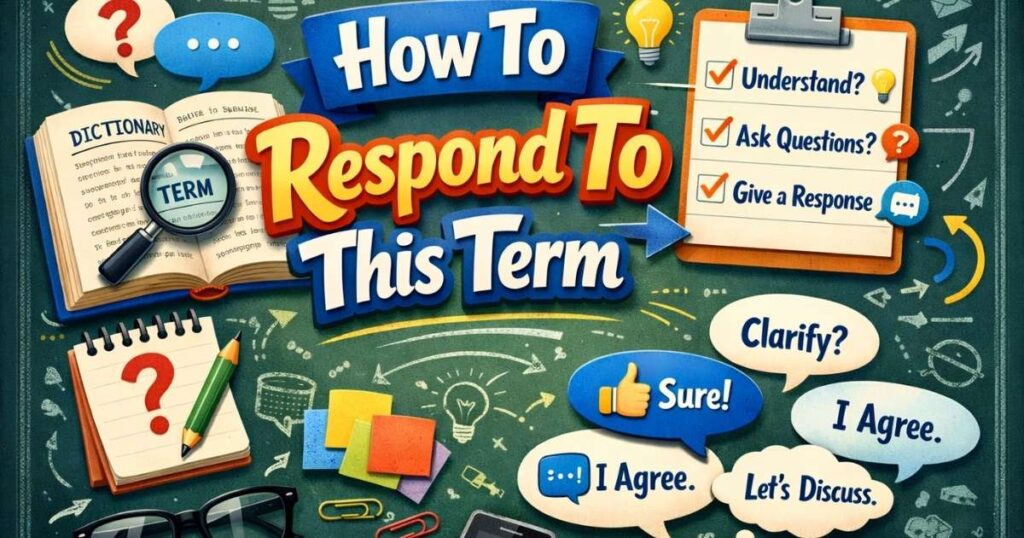
Responding to IDT depends entirely on the context and tone. Sometimes a simple agreement works perfectly. Other times a playful or thoughtful reply fits better depending on the conversation’s vibe.
Reading the mood before responding always helps. IDT is casual so matching that energy usually works best. Don’t overthink it, just keep your reply natural and genuine.
Your response shapes where the conversation goes next. A warm reply keeps things flowing smoothly. A dismissive one can accidentally shut the whole conversation down fast.
Casual Response
Learn more:SM Full Form in Chat: Complete Meaning, Usage, and Examples
When a friend drops IDT just keep things light and easy. If they say “IDT we should go out tonight” simply reply “Yeah let’s just stay in then.” Easy, breezy and totally natural.
Matching their casual energy makes conversations feel comfortable and effortless. No need for long explanations or justifications in response. Short and friendly always wins in casual chat scenarios.
Casual responses build rapport and keep friendships feeling warm and genuine. IDT invites relaxed communication so embrace that energy fully. The simpler your reply the better it usually lands.
IDT Meaning in Text
IDT opens the door perfectly for some playful banter. If someone says “IDT pineapple belongs on pizza” fire back with “Absolute heresy, pineapple is a gift to mankind.” Humor makes conversations memorable and fun.
Witty responses to IDT show personality and keep the energy high. People love chatting with someone who makes them laugh unexpectedly. A clever comeback beats a boring one-word reply every single time.
Don’t force the humor though. Let it come naturally based on the moment. The best funny responses feel spontaneous not scripted or rehearsed at all.
Professional Response
Even in semi-professional spaces someone might casually use IDT. If a colleague says “IDT we’ll hit the deadline” respond thoughtfully with “Good point, let’s reassess priorities and adjust our timeline accordingly.” Stay calm and solution-focused always.
Acknowledging their concern shows emotional intelligence and strong communication skills. Don’t match their informal tone in professional settings though. Elevate the conversation with clear and composed language instead.
Professional responses to casual slang demonstrate maturity and awareness. You understand what they meant without making them feel judged. That balance builds trust and respect in workplace relationships effectively.
Regional Or Cultural Differences
IDT is widely recognized across English-speaking countries especially among younger generations. In the US it’s practically second nature for anyone active on social media. Most teens and young adults use it without thinking twice.
Globally the abbreviation travels well but non-native English speakers may need context. Someone in Japan might write “そう思わない” while a Spanish speaker uses “No creo.” Different languages, same exact meaning and intent behind it.
Cultural nuances affect how doubt gets expressed digitally worldwide. However IDT crosses many of those boundaries naturally and effortlessly. Its simplicity makes it universally understood even across diverse digital communities.
Comparison With Similar Terms
IDT and IDK get confused constantly but they’re not interchangeable. IDT expresses doubt about something while IDK admits a lack of knowledge entirely. Mixing them up sends completely different signals to your reader.
IDT versus IDC is another important distinction worth knowing. IDT shows hesitation or mild disagreement whereas IDC signals pure indifference. One sounds thoughtful and the other can come across as dismissive or cold.
Compared to IMO, IDT feels less opinionated and more uncertain. IMO presents a personal viewpoint with confidence. IDT leaves more room for being wrong and that humility often lands better in conversations.
Usage In Online Communities & Dating Apps
Reddit threads and Discord servers are packed with IDT in daily discussions. Users drop it casually when questioning strategies, opinions or trending topics. It signals skepticism without derailing the entire conversation thread.
Dating apps have embraced IDT in surprisingly creative ways. A bio saying “IDT pineapple belongs on pizza, fight me” shows personality instantly. That playful use of slang makes profiles feel human and approachable to potential matches.
Online communities reward authenticity and IDT delivers exactly that. It strips away formality and lets personality shine through naturally. Whether debating games or flirting on apps IDT fits right in.
Hidden Or Offensive Meanings
Generally speaking IDT carries no offensive or hidden meanings whatsoever. Its intent is straightforward, expressing doubt or mild disagreement in casual conversation. There’s no coded language or problematic subtext lurking behind it.
Tone however can shift its impact significantly in certain contexts. A sarcastic or dismissive delivery can make IDT feel rude even though the word itself isn’t. Always consider how your overall message reads before hitting send.
Unlike some internet abbreviations IDT avoids double meanings almost entirely. It stays clean, neutral and safe across most online spaces and communities. Just stay mindful of tone and context whenever you use it.
Suitability For Professional Communication
IDT doesn’t belong in professional emails, formal reports or workplace announcements. It signals casualness that can undermine your credibility in serious settings. Colleagues unfamiliar with texting slang may misread it entirely.
Instead of IDT try writing “I don’t believe this approach will be effective.” That version communicates the same doubt with clarity and professionalism. Full sentences always serve formal communication better than abbreviations ever will.
Even in casual Slack channels IDT can feel out of place depending on company culture. Read the room before using informal slang at work. When in doubt write it out fully and keep things crystal clear.
Evolution Of IDT In Modern Texting
IDT started as a simple SMS shortcut back in the early 2000s. Character limits forced creativity and abbreviations like IDT emerged naturally from necessity. What began as a workaround became a permanent fixture in digital language.
Smartphones and social media supercharged IDT’s reach across generations. Gen Z and Millennials carried it from MSN Messenger straight into TikTok comment sections. The abbreviation evolved alongside the platforms it lives on.
Today IDT feels less like slang and more like standard digital vocabulary. It’s woven into everyday online communication across multiple platforms and cultures. That kind of staying power proves it’s far more than just a passing trend.
Tips For Using IDT Correctly
Always match IDT to the tone of your conversation before using it. It works beautifully in casual chats but falls flat in serious discussions. Reading the room first saves you from awkward miscommunication every time.
Know your audience before dropping IDT into a message. Younger, digitally active users get it immediately without hesitation. Older or less tech-savvy readers might need a moment to figure it out.
Pair IDT with a friendly tone to keep things warm and approachable. A cold or blunt delivery can make even casual slang feel harsh. Small tweaks in phrasing make a surprisingly big difference in how your message lands.
Popular Mistakes With IDT And How To Avoid Them
Confusing IDT with IDK is the most common mistake people make. They mean very different things so using the wrong one misleads your reader instantly. Double-check which one actually fits your intended meaning before sending.
Overusing IDT in semi-formal settings is another frequent error. Dropping it in work group chats or emails can look lazy and unprofessional. Save it strictly for casual personal conversations where it genuinely belongs.
Some people use IDT when they actually mean a stronger disagreement. In that case IDTS or a full sentence works far better. Precision in language always beats convenience especially when clarity actually matters.
Examples Of IDT Used In Real Conversations
Seeing IDT in action makes its meaning crystal clear instantly. Here are some real-world style examples across different everyday scenarios:
- Texting a friend: “IDT I can make it tonight, work ran late again.”
- Gaming chat: “IDT we can clutch this, they’ve got way better positioning.”
- Social media comment: “IDT this season was as good as everyone’s claiming honestly.”
- Group chat: “IDT it’ll rain tomorrow, the forecast looked pretty clear earlier.”
- Dating app bio: “IDT cilantro belongs in food but here we are surviving somehow.”
Each example shows how naturally IDT slides into different contexts. The tone shifts but the core meaning stays consistent throughout. That versatility is exactly what makes it such a reliable everyday abbreviation.
When Not To Use IDT In Messages
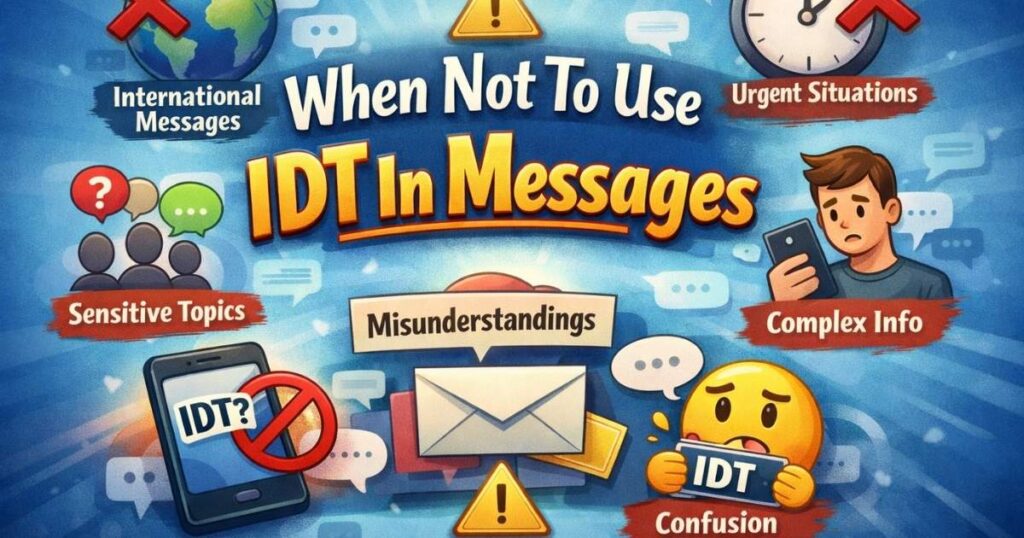
Avoid IDT in any formal or professional communication without exception. Emails to managers, clients or professors demand full sentences and proper language. Slipping in abbreviations there undermines your professionalism immediately and noticeably.
Skip IDT when talking to people unfamiliar with internet slang. Older relatives or international contacts may find it confusing or even rude. Clear direct language always serves those conversations far better than shortcuts.
Sensitive or emotionally heavy conversations also aren’t the right place for IDT. When someone needs genuine support or clarity, abbreviations feel dismissive and cold. Take the extra seconds to write it out fully and show you care.
Why IDT Is Popular In Informal Communication
Speed is the biggest reason IDT dominates informal digital conversations. Nobody wants to type “I don’t think” repeatedly across dozens of messages daily. Three letters do the same job in a fraction of the time.
Beyond speed IDT carries a naturally honest and relatable tone. It doesn’t sound confrontational or harsh the way blunt disagreement sometimes can. That softness makes people feel comfortable using it freely without overthinking consequences.
IDT also just fits the rhythm of modern online communication perfectly. Fast, punchy and expressive, it matches how people actually think and talk digitally. That authenticity keeps it relevant long after countless other slang terms have faded away completely.
FAQ,S
What does IDT full form in chat actually mean?
The IDT full form in chat stands for “I Don’t Think.” People use it to express doubt or mild disagreement quickly in casual online conversations.
Where did the IDT full form in chat originally come from?
IDT full form in chat emerged from early SMS culture in the 1990s. Character limits forced users to create shorter and faster communication shortcuts naturally.
Is the IDT full form in chat suitable for professional use?
Absolutely not. The IDT full form in chat belongs strictly in casual conversations. Professional emails and formal settings always require complete and clearly written sentences instead.
How is IDT full form in chat different from IDK?
IDT expresses doubt while IDK signals lack of knowledge entirely. They feel similar but carry different meanings so using the wrong one causes confusion.
Can anyone use the IDT full form in chat easily?
Yes, anyone can use it. The IDT full form in chat is simple, neutral and widely understood across most English-speaking online platforms and communities today.
Conclusion
Now you know everything about the IDT full form in chat. This complete guide “IDT Meaning in Text: A Complete Guide” covered every angle of this popular abbreviation. The IDT full form in chat simply means “I Don’t Think.” Short, simple and super useful in everyday texting.
Use the IDT full form in chat wisely and always match your audience. It works great in casual chats but skip it in formal settings. Understanding the IDT full form in chat makes online conversations faster and easier. Keep it casual and you’ll fit right in anywhere online.