
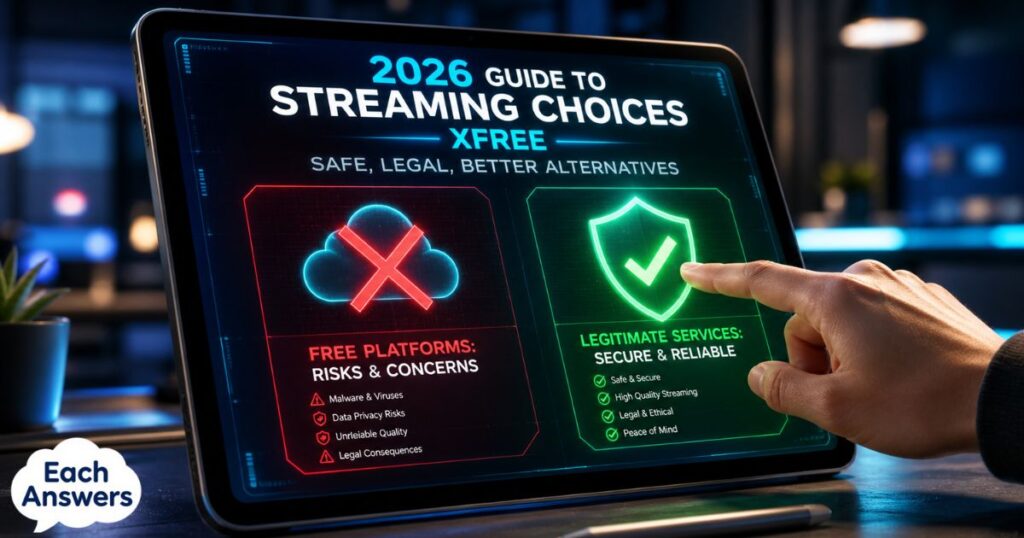
Free movies, live sports, and unlimited TV shows all without spending a single dollar. That’s the XFree promise. No subscriptions. No credit cards. Just content, instantly available. XFree pulls millions of users in every day and it’s easy to see why. It aggregates links from across the internet, giving you access to almost anything you want.
But XFree isn’t all sunshine and free popcorn. Hidden beneath that attractive surface lies a minefield of malware, data theft, and legal trouble. Many users walk straight into these dangers without even realizing it. XFree operates in a shadowy gray zone where your device, your data, and your privacy sit exposed. Knowing exactly what XFree is gives you the power to protect yourself.
What Is XFree? Decoding The Mystery
XFree isn’t just one thing. The term covers multiple platforms and concepts depending on context. Most people searching for XFree want free access to digital content like movies and TV shows. Understanding what XFree actually means saves you a lot of confusion.
XFree operates as a content aggregation service. It doesn’t host files directly. Instead, XFree pulls links from third-party servers scattered across the internet. You click play and get redirected through multiple hops before reaching actual content.
Many versions of XFree exist online today. Some are streaming platforms. Others are software tools or marketing terms. Knowing which XFree you’re dealing with matters enormously before you dive in headfirst.
The Platform Interpretation
Most people find XFree while hunting for free streaming options. The XFree platform works like a giant directory of links pointing toward free movies, shows, and sports. It doesn’t own the content it lists.
XFree attracts massive traffic because it offers content without paywalls. New releases, live sports, and rare TV series all appear on XFree regularly. However, most of this content gets shared without proper licensing or authorization from copyright holders.
Users quickly discover that XFree links are unreliable. Dead links, broken streams, and mislabeled files are everywhere. Finding something that actually works takes patience and a healthy dose of luck.
The Technical Legacy: XFree86
Tech enthusiasts recognize XFree86 as something entirely different from streaming platforms. XFree86 was a groundbreaking open-source implementation of the X Window System. It powered graphical interfaces on UNIX and Linux machines throughout the 1990s.
XFree86 provided display servers, graphics rendering, and window management for countless computers worldwide. It was revolutionary for its time. Without XFree86, modern Linux desktop environments might look completely different today.
However, a licensing dispute in 2004 pushed most Linux distributions toward X.Org Server instead. XFree86 became obsolete almost overnight. Its legacy lives on quietly inside the foundations of modern open-source computing.
Marketing Terminology Usage
Companies use “x-free” as a powerful marketing label. It signals the absence of something undesirable. Ad-free, sugar-free, subscription-free the formula works brilliantly across dozens of industries and product categories.
Streaming services leverage this terminology heavily. Promising a “registration-free” or “subscription-free” experience immediately grabs consumer attention. People respond instinctively to anything promising freedom from fees or annoying restrictions.
XFree as a marketing term capitalizes on genuine consumer frustration. Paywalls irritate people. Mandatory sign-ups feel invasive. Anything promising to eliminate those friction points attracts clicks, users, and massive engagement almost automatically.
How XFree Works: Behind The Curtain
XFree runs on surprisingly simple infrastructure. Lightweight servers host the website interface while web scraping bots constantly hunt for fresh content links. Mirror sites stand ready to replace domains whenever authorities shut them down.
XFree never stores actual video files. It maintains a database of external links instead. This clever architecture dramatically reduces hosting costs while creating legal distance from direct copyright violations. You’re always one redirect away from the actual content.
The user interface looks chaotic by design. Misleading download buttons, aggressive pop-ups, and fake warnings clutter every page. Real content hides beneath layers of promotional garbage deliberately engineered to generate advertising revenue.
Platform Architecture Breakdown
XFree’s backend relies on three core components. First, a lightweight web server handles user requests. Second, a constantly updated link database catalogs available content. Third, automated bots scrape the internet for fresh sources daily.
Content delivery happens through redirection chains. You click a link on XFree and bounce through multiple third-party servers before reaching the actual video file. Each hop creates legal separation between XFree operators and the pirated content itself.
This architecture serves operators perfectly but frustrates users constantly. Links break frequently because any server in that chain can go offline anytime. The whole system feels like a house of cards built on borrowed time.
Access Models And Restrictions
XFree typically offers tiered access levels. Here’s how those tiers usually break down:
| Access Level | Features | Cost | Reality |
| Free | Basic links | $0 | Heavy ads, slow speeds |
| Premium | Fewer ads, HD | $5-15/month | Often a scam |
| VIP | Direct downloads | $20+/month | Still illegal content |
Geographic restrictions add another layer of complexity. Countries with aggressive copyright enforcement often get blocked entirely. XFree operators calculate legal risk by region and adjust access accordingly to protect themselves from takedowns.
Never provide payment details to XFree platforms. Legitimate services don’t need your credit card for age verification. That request is almost always a data harvesting attempt designed to steal your financial information.
The Content Ecosystem
XFree aggregates content from incredibly diverse sources. New movie releases appear quickly, often as shaky cam recordings from actual theaters. Current TV episodes show up within hours of broadcast, sometimes even earlier through leaked screeners.
Quality control doesn’t exist here. Mislabeled files, broken streams, and bait-and-switch redirects are standard features rather than exceptions. One supposed HD movie might turn out to be a phone recording with someone’s head blocking half the screen.
Live sports streams present their own unique nightmare. Laggy feeds, sudden disconnections, and streams that vanish right before crucial moments define the XFree sports experience. Reliability isn’t something XFree delivers consistently to anyone.
XFree Features: What You Actually Get
XFree offers basic search functionality letting you find movies, shows, and sports content quickly. Type a title and multiple links appear instantly. However, expect roughly half those links to be completely dead before you even click them.
Streaming options include direct browser playback, external player support, and occasional download links. Browser playback requires enabling questionable plugins that most security experts strongly advise against. External players like VLC offer slightly safer alternatives for cautious users.
Category browsing, trending sections, and user request systems round out the feature set. Trending sections often get manipulated to boost ad revenue. Request systems rarely fulfill anything. The gap between promised features and actual delivery stays consistently wide.
Core Functionality
Search and discovery form XFree’s backbone. Users type titles and receive link lists ranked by recency and popularity. Older or obscure titles disappear from results quickly as fresher content pushes them aside permanently.
Playback options vary across different XFree platforms. Some offer embedded video players directly in the browser. Others redirect you to external hosting sites where actual playback happens. Neither experience feels smooth or particularly reliable for long viewing sessions.
Download functionality exists but carries enormous risk. Files often contain malware disguised as legitimate video content. Always verify file sizes before downloading anything a genuine HD movie should never be smaller than 1GB.
Hidden Capabilities
Power users discover XFree features that casual visitors never notice. Some platforms support Boolean search operators. Combining keywords like “thriller 2024 bluray” produces dramatically better results than vague single-word searches alone.
Certain XFree clones offer RSS feeds for tracking new uploads. Developers occasionally build third-party apps that tap into XFree databases through unofficial APIs. These apps get abandoned quickly whenever the underlying XFree site shuts down unexpectedly.
Community forums and Discord servers sometimes accompany larger XFree platforms. These spaces share working mirrors and fresh links. Approach them cautiously though scammers and malware distributors actively target these communities every single day.
What XFree Doesn’t Offer
XFree offers zero customer support. Nobody answers complaints. Nobody processes refund requests. If something breaks or goes wrong you’re completely on your own without any recourse whatsoever.
Content guarantees don’t exist here either. Links die constantly without warning or replacement. Quality promises mean absolutely nothing. That “4K stream” could easily turn out to be unwatchable 360p footage with no way to get compensation.
Legal protection is completely absent from the XFree experience. Copyright holders can pursue users directly. ISPs monitor traffic and send warning letters. XFree operators hide safely offshore while you absorb every consequence of using their platform alone.
Safety, Legitimacy, And Legal Landmines
XFree platforms sit at the intersection of three serious dangers. Security threats, legitimacy concerns, and legal exposure combine to create a genuinely hazardous online environment. Most users underestimate all three risks simultaneously.
Malware distribution happens constantly across XFree sites. A single misplaced click installs cryptocurrency miners, ransomware, or keyloggers onto your device instantly. These infections often run silently in the background for weeks before detection.
Legal exposure varies by country but remains real everywhere. Copyright holders actively pursue infringement cases globally. The entertainment industry spends millions annually tracking piracy and sending settlement demands to identified users caught streaming without authorization.
Is XFree Safe? The Honest Truth
XFree isn’t safe. That’s the straightforward answer without sugar-coating anything. Security risks exist at every level of the XFree experience from the moment you land on the homepage.
Malware hides inside ads, fake download buttons, and even video players themselves. Data harvesting happens automatically through aggressive tracking scripts that follow you across the internet long after you leave XFree behind entirely.
Network vulnerabilities add another dimension of danger. Each redirect hop represents a potential attack point. Your ISP logs every visit creating a permanent paper trail. Even cautious users face meaningful risks that most people dramatically underestimate.
Legitimacy Assessment: Following The Money
XFree’s business model reveals everything about its legitimacy. No transparent ownership. Privacy-protected domain registration. Servers hosted in countries with weak intellectual property enforcement. These red flags scream illegitimacy loudly and clearly.
Revenue flows primarily through shady advertising networks that legitimate brands actively avoid. Bottom-tier ads for crypto scams, fake antivirus software, and gambling sites dominate every XFree page. Reputable companies simply don’t advertise in these spaces at all.
Fake premium tiers expose the scam most clearly. Users pay for upgraded access and receive nothing meaningful in return. Operators collect payments, deliver almost nothing, then disappear when complaint volumes rise too high to ignore any longer.
Legal Considerations: The Uncomfortable Reality
Streaming copyrighted content without authorization constitutes infringement in most countries worldwide. The common “I’m just watching, not downloading” defense fails consistently in courts across multiple jurisdictions. Temporary cache copies count as reproduction legally.
| Region | Enforcement Level | Potential Consequences |
| United States | High | DMCA notices, lawsuits |
| European Union | High | Fines up to €1,000+ |
| United Kingdom | High | Prosecution possible |
| Canada | Medium | Notice-and-notice system |
| Southeast Asia | Low | Minimal enforcement |
Copyright holders pursue infringement aggressively. Settlement demands between $200 and $5,000 arrive regularly to identified users. Most people never face consequences but “most people” offers cold comfort when a settlement letter lands in your inbox unexpectedly.
Privacy Nightmares
XFree treats user privacy like an inconvenient afterthought. Every visit gets logged. IP addresses, browser fingerprints, device information, and detailed viewing habits all get harvested automatically without your knowledge or meaningful consent.
Collected data flows directly to third-party brokers who package and resell it endlessly. Advertising networks, data aggregators, and unknown entities in countries with zero privacy laws all purchase your behavioral profile. You become the product instantly upon arrival.
Aggressive tracking technologies make things worse. Persistent cookies survive clearing attempts. Canvas fingerprinting identifies you across sessions. WebRTC leaks expose your real IP address even through VPN connections in certain browser configurations.
Getting Started: The Beginner’s Guide (Proceed With Caution)
Starting with XFree requires serious preparation before touching anything. Create a disposable email address through services like TempMail first. Never connect your real identity to any XFree account under any circumstances whatsoever.
Install uBlock Origin and a popup blocker before visiting any XFree platform. These tools block the most aggressive ad attacks automatically. Consider using private browsing mode for every single XFree session without exception.
Understand the risks fully before proceeding. XFree exposes you to malware, legal liability, and privacy violations simultaneously. No content is worth compromising your device security or personal data permanently.
Account Creation Process
Creating an XFree account takes minimal information usually just a throwaway email and a unique password. Use a password manager to generate credentials you’ve never used anywhere else. Reusing passwords creates catastrophic security vulnerabilities across all your accounts.
Never fill optional profile fields with real information. False details protect your identity from data harvesting operations. Skip any step requesting phone numbers, real names, or location information none of that serves any legitimate purpose on these platforms.
Payment information requests should trigger immediate alarm. Legitimate free platforms never need credit card details for age verification or account activation. Any such request signals either a scam or an identity theft operation targeting you directly.
Best Practices For Survival
Safe XFree usage demands layered protection. Never download files with .exe, .bat, or .scr extensions under any circumstances. Verify file sizes carefully genuine HD movies run several gigabytes minimum, not suspiciously small file sizes measured in megabytes.
Read user comments before clicking unfamiliar links whenever comment sections exist. Recent comments reveal whether links actually work or lead somewhere dangerous. Fresh upload dates indicate higher probability of functional streams worth attempting.
Close aggressive pop-ups immediately without clicking anything inside them. Use your browser’s built-in close function rather than any button displayed within the pop-up itself. Many fake close buttons trigger additional malware downloads automatically.
Troubleshooting Common Disasters
XFree sites vanish overnight without warning. Bookmark multiple mirror domains simultaneously so losing one doesn’t cut off access entirely. Search engines help locate current working domains add “mirror” or “proxy” to any XFree-related search query.
Dead links represent the most common frustration. Error messages carry specific meanings worth understanding:
- File not found removed or never existed
- Bandwidth exceeded free host limitations hit
- Access denied geographic restrictions blocking you
Performance problems stem from overcrowded servers and poor infrastructure. Try switching to wired internet connections. Lower quality settings when available. Different times of day bring dramatically different speeds depending on global traffic patterns.
XFree Pros And Cons: The Unfiltered Assessment
XFree presents a genuinely complicated value proposition. Free access to massive content libraries sounds irresistible on the surface. But the hidden costs security risks, legal exposure, wasted time paint a very different picture underneath that attractive exterior.
Understanding both sides honestly helps you make a genuinely informed decision. XFree delivers real advantages that millions find compelling enough to accept serious risks. Those risks, however, extend far beyond what most casual users ever anticipate or prepare for adequately.
Weighing pros against cons requires brutal honesty about your risk tolerance. Some tradeoffs feel manageable. Others represent genuine deal-breakers that no amount of free content justifies accepting under any reasonable circumstances.
Advantages (Such As They Are)
Cost savings represent XFree’s most powerful advantage. Movie tickets cost $15 each. Streaming subscriptions run $10-20 monthly. XFree costs nothing upfront making it extraordinarily attractive to budget-conscious users everywhere around the world.
Content variety genuinely impresses. Obscure foreign films, out-of-print TV series, regional sports broadcasts, and geo-restricted content all appear on XFree regularly. Legitimate services simply can’t match this breadth of availability across every category simultaneously.
No subscription commitment appeals strongly to casual viewers. Access content whenever you want then walk away without cancellation fees or billing complications. That flexibility feels genuinely refreshing compared to aggressive subscription renewal practices from major streaming platforms.
Disadvantages (The Real Talk)
Quality inconsistencies make XFree genuinely painful. Pixelated video, desynchronized audio, hardcoded foreign subtitles, and distorted aspect ratios appear constantly. That “HD” label means absolutely nothing when the actual stream looks like it was recorded underwater.
Advertisement overload crosses into hostile territory fast. Auto-playing videos, fake close buttons, casino redirects, and crypto-mining scripts assault every user relentlessly. XFree doesn’t just show ads it weaponizes them against the very audience it supposedly serves.
Unreliable availability haunts every XFree session. Sites vanish overnight. Links rot within days. The entire ecosystem operates on borrowed time with no stability guarantees whatsoever. Building any kind of consistent viewing habit around XFree proves essentially impossible.
Deal-Breakers Vs. Manageable Annoyances
Some XFree problems qualify as genuine deal-breakers that should stop you completely. Malware distribution, legal liability, identity theft risk, and direct support for criminal piracy operations fall firmly into this category. These aren’t minor inconveniences they’re serious threats.
Other issues land in the manageable annoyance category instead. Pop-up ads, slow loading times, broken links, and mediocre video quality frustrate users but don’t cause lasting damage. Experienced users develop workarounds that reduce these irritations significantly over time.
The honest question becomes whether manageable annoyances justify accepting genuine deal-breakers simultaneously. For most people making a clearheaded assessment, the answer lands firmly and decisively in the “absolutely not” column every single time.
XFree Vs. Competitors: How It Stacks Up
XFree competes in a crowded free streaming landscape but stands apart for entirely wrong reasons. Legal free platforms like Tubi and Pluto TV offer comparable content libraries without any associated security threats or copyright liability whatsoever.
The comparison becomes uncomfortable for XFree quickly. Every legitimate competitor delivers better video quality, reliable streams, and genuine customer support. XFree’s only real competitive advantage remains its sheer breadth of pirated content including brand new releases.
That advantage shrinks daily as legal platforms expand their libraries aggressively. The gap between what XFree offers illegally and what legitimate services provide legally has narrowed dramatically over the past several years across every major content category.
Direct Comparison
| Feature | XFree | Tubi | Pluto TV | Crackle |
| Cost | Free | Free | Free | Free |
| Legality | Questionable | Legal | Legal | Legal |
| Video Quality | Inconsistent | Up to 1080p | Up to 1080p | Up to 720p |
| Malware Risk | High | None | None | None |
| Ads | Malicious | Standard | Standard | Standard |
| Support | None | Yes | Yes | Yes |
This comparison tells a stark story. XFree matches legitimate competitors on price while losing badly on every other meaningful metric. Safety, quality, reliability, and legality all favor legitimate platforms overwhelmingly and without serious contest.
The “free” label tricks users into thinking XFree and Tubi offer equivalent value. They don’t. One delivers a safe, enjoyable experience. The other delivers a malware-riddled gamble disguised as entertainment with serious consequences waiting patiently in the background.
XFree Vs. Paid Platforms
Netflix charges $6.99 monthly at minimum. XFree charges nothing. That price difference feels enormous until you calculate XFree’s true hidden costs malware removal runs $100-500, legal settlement demands reach thousands, and compromised data causes damage lasting years.
Paid platforms deliver absolute consistency. You know exactly what you’re getting every single time. 4K quality, reliable streams, genuine customer support, and zero legal anxiety create an entertainment experience that XFree simply cannot replicate at any price point.
Original content tips the scales further toward paid platforms. Award-winning shows, exclusive movies, and platform-specific programming justify subscription costs for millions of users globally. XFree offers none of this just an unreliable mirror of content created and funded by others.
Top XFree Alternatives (Legitimate Options)
Several excellent free legal alternatives make XFree genuinely unnecessary for most viewers:
- Tubi 50,000+ titles, standard ads, works everywhere
- Pluto TV 250+ live channels plus on-demand content
- Crackle Sony-backed, original programming, classic movies
- Freevee Amazon-supported, minimal ads, popular titles
- Plex Free tier with live TV and massive on-demand library
- Kanopy Free through public library cards, art house films
- Hoopla Movies, TV, music, ebooks via library membership
These platforms collectively cover the vast majority of actual viewing habits. Most users discover they only needed a fraction of XFree’s massive pirated catalog to satisfy their genuine entertainment needs completely.
Migration Difficulty
Switching from XFree to legitimate services feels harder than it actually is. The main adjustment involves accepting smaller libraries and waiting for official content releases instead of accessing pirated versions immediately after production wraps.
Tolerating standard advertising represents another adjustment. Tubi and Pluto TV run normal TV-style ads annoying but harmless. That shift from XFree’s malicious advertising to standard commercial breaks actually feels like a massive upgrade almost immediately.
Most users complete the mental transition within two weeks. Once reliable streams and genuine quality become the baseline expectation, returning to XFree’s broken links and malware roulette feels genuinely unthinkable by comparison.
Advanced Usage Tips (For The Reckless)
Learn more:What Does GNG Mean?GNG Meaning in Text, Chat, Slang & TikTok in 2026
Determined XFree users can reduce risks significantly through careful preparation. Layered security measures don’t eliminate danger but they meaningfully reduce exposure to the worst threats lurking across every XFree platform online today.
Virtual machines offer the strongest protection available. Running XFree inside an isolated virtual environment prevents malware from reaching your actual operating system. Tools like VirtualBox create this separation without requiring expensive hardware investments.
Browser configuration matters enormously. uBlock Origin, Privacy Badger, HTTPS Everywhere, and NoScript collectively neutralize most XFree attack vectors before they reach your device. Stack these tools together rather than relying on any single solution alone.
Power User Strategies
Efficiency separates frustrated beginners from experienced XFree navigators. Bookmark working domains inside encrypted bookmark managers rather than relying on memory. Use URL checkers to verify link functionality before clicking anything unfamiliar or suspicious.
Advanced search techniques dramatically improve content discovery. Exact title searches with release years yield far better results than vague keyword queries. Adding quality indicators like “bluray” or “1080p” filters out the worst low-quality sources automatically.
Private communities sharing current mirrors provide more reliable information than public forums. Approach these spaces with extreme caution though. Scammers actively infiltrate these groups specifically to target users who already demonstrate willingness to take risks online.
Content Discovery Optimization
Smart searching saves enormous amounts of wasted time on XFree platforms. Combine specific keywords rather than browsing categories broadly. “Korean drama 2024 english subtitles” returns dramatically more useful results than simply clicking the foreign films category.
Upload date filtering helps identify functional links worth attempting. Recently uploaded content has higher survival rates than older links that copyright holders have already targeted with takedown requests. Sort by newest whenever that option exists.
Community knowledge amplifies individual discovery efforts significantly. Other users flag working links and warn about malware in comment sections. Lurking in these spaces without participating personally reduces exposure while still harvesting genuinely useful navigation intelligence.
Enhanced Safety Measures
VPN selection requires careful research. Free VPNs almost universally sell user data to cover operational costs they’re often worse than using nothing at all. Reputable paid options like Mullvad or ProtonVPN offer genuine no-log policies worth trusting.
DNS-level blocking through services like NextDNS or Pi-hole stops malicious domains before your browser ever contacts them. This layer of protection operates independently from browser extensions providing meaningful redundancy when individual tools fail unexpectedly.
Regular system scans catch infections that slip through initial defenses. Schedule automatic scans with Malwarebytes alongside your primary antivirus solution. Maintain current backups of important data so ransomware attacks don’t result in permanent catastrophic losses.
The Business Model: How XFree Makes Money
XFree operators run surprisingly profitable businesses built entirely on other people’s content and your personal data. Understanding their revenue streams reveals why these platforms exist despite constant legal pressure and technical challenges from copyright enforcement authorities.
Bottom-tier advertising networks pay XFree operators $1-5 per thousand impressions. High-traffic sites generate thousands of daily impressions easily. A single successful XFree domain generates $50-500 daily from advertising alone before factoring in data monetization revenue.
Premium tier scams add another revenue stream on top of advertising income. Users pay for upgraded experiences that never materialize. Operators collect payments then disappear when complaints accumulate. The cycle repeats endlessly under fresh domain names with identical scam structures.
Revenue Generation Methods
Advertising forms the financial foundation of every XFree operation. Legitimate ad networks refuse these platforms entirely so operators partner with bottom-tier networks pushing crypto scams, fake security software, and gambling sites at users relentlessly throughout every session.
Data monetization runs parallel to advertising revenue quietly. Your browsing profile carries real monetary value typically $0.001 to $0.01 per user profile. Email addresses fetch $0.05 to $0.50 each from data brokers. XFree platforms harvest and sell everything they collect constantly.
Affiliate partnerships add supplementary income through VPN service promotions and file hosting referrals. Some XFree platforms earn commissions directing users toward other questionable services. Every recommendation on these platforms serves operator profits rather than genuine user interests.
Sustainability Questions
XFree platforms live short turbulent lives. Most survive only 6-18 months before domain seizures, payment processor bans, or hosting terminations force shutdown. Operators immediately launch identical replacements under new names continuing the cycle indefinitely.
Legal pressure intensifies annually as copyright enforcement improves technologically. Rights holders deploy sophisticated tracking systems identifying infringing platforms faster than ever before. The window between launch and takedown shrinks consistently with each passing year of improved enforcement.
Legitimate streaming services meanwhile grow stronger and more competitive constantly. Lower prices, better content, and superior technology erode XFree’s core advantage steadily. The long-term outlook for XFree-style platforms trends unmistakably toward inevitable obsolescence and irrelevance.
Common Questions And Misconceptions
XFree generates enormous confusion among users unfamiliar with how these platforms actually operate. Separating genuine facts from widespread myths helps users make genuinely informed decisions rather than choices based on popular but dangerously inaccurate assumptions.
Legal misconceptions prove particularly dangerous. Many users genuinely believe streaming without downloading creates zero legal liability. Courts across multiple jurisdictions have rejected this reasoning repeatedly and consistently. The temporary cached copies created during streaming constitute reproduction under copyright law.
Security misconceptions cause equal damage. Users assume VPNs create complete anonymity and protection. They don’t. VPNs hide activity from ISPs but not from website operators, advertising networks, malware already installed on devices, or court orders served directly to VPN providers.
Frequently Asked Questions
Can my ISP see XFree usage? Absolutely yes. ISPs monitor DNS queries and traffic patterns continuously. VPNs redirect this visibility toward your VPN provider instead of eliminating it entirely.
Do premium XFree accounts work? No. They’re scams designed purely to harvest payment information. You’ll pay and receive either nothing or the identical free-tier experience.
Can XFree infect my device? Yes without question. Every click on an XFree platform carries malware risk. Downloading files multiplies that risk exponentially beyond casual streaming exposure.
Why hasn’t XFree been permanently shut down? It has been repeatedly. New domains launch immediately after each takedown. The decentralized structure and offshore operation make permanent elimination essentially impossible with current enforcement tools.
Myth-Busting Section
Myth: Streaming isn’t downloading so it’s legal. Reality: Streaming creates temporary device copies. Courts treat this as copyright infringement consistently across most major jurisdictions worldwide without meaningful exception.
Myth: VPNs make you completely untraceable. Reality: VPNs hide ISP visibility only. Website operators, advertising networks, installed malware, and court-ordered VPN data requests all bypass VPN protection entirely.
Myth: Nobody actually faces consequences. Reality: ISP warning letters arrive regularly. Settlement demands targeting individual users reach thousands of dollars. Pirate Bay founders served actual prison sentences for operating similar platforms.
Myth: Free content doesn’t hurt anyone. Reality: Piracy directly reduces creator income, shrinks production budgets, eliminates industry jobs, and undermines incentives for original content creation across every entertainment category.
The Verdict: Should You Use XFree?
XFree delivers one genuine thing free access to content you’d otherwise pay for. Everything surrounding that single benefit ranges from mildly frustrating to genuinely dangerous. The honest verdict lands clearly against regular XFree use for most people.
Security risks alone justify avoidance for anyone without serious technical expertise and dedicated security infrastructure. Malware infections cause real financial damage. Data theft creates lasting problems. Legal exposure brings genuine anxiety even when consequences never materialize into actual enforcement action.
Better options exist today than at any previous point in streaming history. Legal free platforms cover most viewing needs adequately. Affordable paid subscriptions fill remaining gaps. The combination eliminates every XFree risk while delivering superior experiences across every measurable dimension.
Key Takeaways Summary
Here’s what matters most about XFree distilled clearly:
- XFree aggregates pirated content links without hosting files directly
- Security risks include malware, data theft, and network vulnerabilities
- Legal exposure exists in most countries despite enforcement inconsistency
- Quality and reliability consistently disappoint compared to legitimate alternatives
- Free legal options like Tubi and Pluto TV eliminate most reasons to use XFree
- Hidden costs including malware removal and legal fees often exceed legitimate subscription prices
Decision-Making Framework
Ask yourself three honest questions before using XFree. First are you genuinely comfortable accepting malware risk, ISP monitoring, and potential legal consequences simultaneously. Second does free content justify hours hunting broken links and suffering malware attacks. Third have you actually explored legitimate free alternatives that eliminate every associated risk completely.
Most people answer these questions and discover XFree makes zero practical sense for their situation. The risks outweigh benefits decisively once you account honestly for everything involved rather than focusing exclusively on the attractive zero-dollar price point.
Your personal risk tolerance ultimately determines the answer. But make that decision with complete information rather than optimistic assumptions about dangers that affect real users every single day across every region globally.
Final Recommendations
Most users should avoid XFree entirely and explore legal alternatives instead. Tubi offers 50,000 titles at zero cost. Pluto TV delivers 250 live channels free. Library cards unlock Kanopy and Hoopla without spending anything beyond existing membership fees.
Budget-conscious viewers benefit most from subscription rotation strategies. Subscribe to Netflix one month, cancel, switch to Hulu the next month, then try Max afterward. Total cost stays under $15 monthly while maintaining complete legal safety and consistent streaming quality.
International users frustrated by geo-restrictions should use legitimate VPN services with existing legal subscriptions rather than turning to XFree. This approach respects copyright while solving the actual problem driving many users toward piracy platforms initially.
The Uncomfortable Truth
XFree represents a genuine Faustian bargain. Free entertainment in exchange for your security, legal standing, and ethical integrity simultaneously. The entertainment industry’s genuine greed makes piracy feel justified to millions of frustrated users globally.
But frustration with studio pricing doesn’t change the practical calculus. Malware infects smart people. Legal letters arrive to cautious users. Data theft happens to technically sophisticated individuals. Believing “it won’t happen to me” represents optimism bias rather than genuine risk assessment.
The streaming landscape has improved dramatically. Legal options now cover nearly everything XFree offers without any associated dangers. The “I can’t afford it” justification collapses when Tubi provides 50,000 titles for absolutely nothing.
Moving Forward: Better Alternatives Exist
The smartest path forward combines several strategies simultaneously. Rotate paid subscriptions monthly to access everything affordably. Layer free legal platforms for gap coverage. Use library streaming services for specialty and art house content needs.
This combined approach costs between $0 and $15 monthly depending on choices made. It delivers better quality, complete legal protection, genuine customer support, and zero malware anxiety. The comparison with XFree’s actual experience becomes almost embarrassingly one-sided.
Support content you genuinely love by accessing it through legitimate channels. Creators deserve compensation for their work. You deserve security and genuine peace of mind. Both outcomes become achievable simultaneously once XFree exits the picture entirely and permanently.
Conclusion
XFree Explained: Everything You Need to Know About This Controversial Platform 2026 covers every angle honestly. XFree attracts millions with its free content promise. But XFree carries serious risks that nobody should ignore. Malware, legal trouble, and data theft follow XFree closely everywhere.
Smart users choose safer paths instead. Legal free platforms deliver better experiences than XFree without any dangerous consequences. XFree simply isn’t worth the hidden costs involved. Your security and peace of mind matter far more than free movies. Explore legitimate alternatives today and leave XFree behind permanently.